
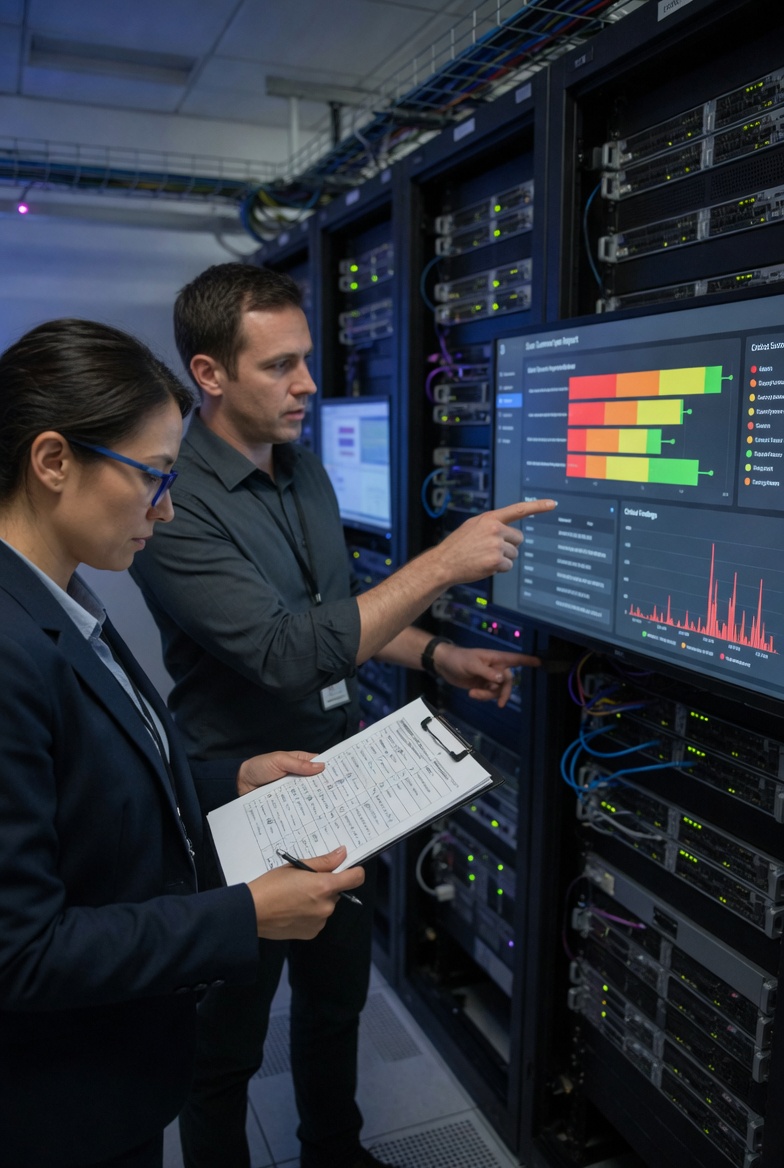
A security assessment is one of the most effective ways for organizations to understand their cybersecurity posture, identify risks, and prioritize improvements. Yet many assessments fail to deliver meaningful results because they focus narrowly on technology while overlooking governance, operational processes, documentation, and business risk.
An effective security assessment should provide leadership with a clear understanding of current security maturity, existing vulnerabilities, compliance readiness, and practical remediation priorities. The goal is not simply to identify problems—it is to create a roadmap for reducing risk and improving resilience.
This guide explains the core components of a comprehensive security assessment and how organizations can use assessment results to strengthen cybersecurity programs.
Why Security Assessments Matter
Cybersecurity threats continue to evolve, while technology environments become increasingly complex. Organizations often accumulate security gaps over time through system changes, cloud adoption, staff turnover, acquisitions, and evolving business requirements.
Regular security assessments help organizations:
- Identify security weaknesses
- Reduce cyber risk exposure
- Improve compliance readiness
- Validate existing controls
- Prioritize cybersecurity investments
- Strengthen executive decision-making
- Improve operational resilience
Organizations that conduct regular assessments are generally better prepared to respond to emerging threats and changing compliance requirements.
Start With Business Context
Every assessment should begin with understanding the organization itself. Security controls should align with business objectives, operational requirements, regulatory obligations, and risk tolerance.
An assessment should evaluate:
- Business operations
- Critical systems and applications
- Sensitive information
- Customer requirements
- Regulatory obligations
- Third-party dependencies
- Risk management objectives
Without business context, technical findings often lack meaningful prioritization.
Asset Inventory Review
Organizations cannot effectively secure assets they do not know exist. A security assessment should review asset inventories to identify systems, devices, applications, cloud services, and data repositories.
- Servers and workstations
- Cloud platforms
- Network infrastructure
- Mobile devices
- Microsoft 365 environments
- Business applications
- Third-party services
Incomplete asset visibility remains a common source of security risk.
Identity and Access Management Review
Identity security is often the most critical area evaluated during an assessment because compromised credentials continue to be a leading cause of cybersecurity incidents.
- User account management
- Administrative privileges
- Multifactor authentication deployment
- Password policies
- Conditional Access controls
- Guest account management
- Privileged access oversight
The objective is to ensure users have appropriate access while minimizing opportunities for abuse or compromise.
Vulnerability Assessment
Vulnerability management is a core component of any security assessment. Organizations should identify known weaknesses that could be exploited by attackers.
- Operating system vulnerabilities
- Application vulnerabilities
- Configuration weaknesses
- Unsupported software
- Missing security updates
- Network exposure issues
Effective assessments prioritize findings based on risk rather than simply reporting large numbers of vulnerabilities.
Microsoft 365 Security Evaluation
Because Microsoft 365 serves as the operational backbone for many organizations, assessments should review security configurations thoroughly.
- Microsoft Entra ID configuration
- Multifactor authentication
- Conditional Access policies
- Administrative roles
- Microsoft Defender settings
- Email security controls
- Audit logging
- Data protection capabilities
Misconfigured Microsoft environments frequently create unnecessary security exposure.
Security Monitoring and Detection
Assessments should evaluate whether the organization can effectively detect suspicious activity and respond appropriately.
- Log collection practices
- Alerting capabilities
- Threat detection processes
- Security monitoring coverage
- Incident escalation procedures
- Response readiness
Organizations often discover monitoring gaps that limit visibility into security events.
Policy and Documentation Review
Technology controls should be supported by governance processes and documentation.
- Security policies
- Incident response plans
- Business continuity plans
- Acceptable use policies
- Access management procedures
- Vendor management documentation
- Compliance documentation
Documentation should accurately reflect how security activities are performed in practice.
Compliance Readiness Assessment
Organizations operating within regulated industries often need to evaluate readiness against cybersecurity frameworks and customer requirements.
- NIST SP 800-171
- CMMC requirements
- Client security requirements
- Cyber insurance requirements
- Industry-specific obligations
Compliance reviews help identify gaps before audits or formal assessments occur.
Business Continuity and Recovery Readiness
Security assessments should evaluate resilience in addition to prevention.
- Backup strategies
- Recovery procedures
- Disaster recovery planning
- Business continuity capabilities
- Testing and validation activities
Organizations should understand how quickly critical systems can be restored following disruption.
Risk Analysis and Prioritization
A good assessment does more than identify findings. It helps leadership understand which issues require immediate attention and which can be addressed over time.
- Likelihood of exploitation
- Business impact
- Compliance implications
- Operational dependencies
- Remediation complexity
- Resource requirements
Risk-based prioritization helps organizations allocate resources effectively.
Assessment Deliverables
Organizations should expect actionable deliverables from a security assessment.
- Executive summary
- Detailed findings
- Risk ratings
- Remediation recommendations
- Improvement roadmap
- Compliance observations
- Strategic recommendations
The final report should support both technical remediation and executive decision-making.
Common Assessment Mistakes
- Focusing only on technology
- Ignoring governance processes
- Failing to prioritize findings
- Overlooking cloud environments
- Treating assessments as one-time events
- Failing to track remediation progress
Organizations derive the greatest value when assessments become part of an ongoing security improvement program.
How Mythos Technology Helps
Mythos Technology performs practical security assessments that help organizations understand risk, improve cybersecurity maturity, and strengthen compliance readiness.
Our assessments evaluate technology, governance, operational processes, Microsoft 365 environments, and compliance requirements to provide a comprehensive view of organizational security.
Schedule a Security & Compliance Review
If your organization wants to better understand its cybersecurity posture, identify improvement opportunities, or prepare for compliance initiatives, Mythos Technology can help.
Schedule a Security & Compliance Review to evaluate your current security posture and build a practical roadmap for improvement.
“`